
The same applies to “baby nose jobs,” “mini facelifts,” and every other so-called subtle cosmetic enhancement filling your social feeds.
Terms like Baby Botox, lip hydration, and other so-called “tweakments” have become common in aesthetic medicine. Yet despite the softer branding, these procedures aren’t fundamentally different from their conventional counterparts. Cosmetic treatments continue to grow in popularity, making refreshed, polished appearances increasingly common—not just among celebrities, but also influencers and everyday people.
With cosmetic procedures becoming more accessible and openly discussed, you might expect greater transparency. Instead, many public figures still avoid directly acknowledging what they’ve had done. When questioned about their appearance, they’ll often credit healthy eating, skincare routines, or lifestyle habits before casually mentioning that they had “just a tiny bit of filler” or “a little Baby Botox” years ago. The emphasis is almost always on how minimal the treatment supposedly was.
The message seems clear: this wasn’t really cosmetic work—it barely counts.
This language isn’t limited to injectables. Surgical procedures are increasingly marketed with labels such as baby rhinoplasty, mini facelift, or mini brow lift, suggesting they deliver subtle improvements with less commitment. In reality, however, changing the terminology doesn’t change the procedure itself. Whether the result is dramatic or understated, surgery still requires careful planning, technical precision, and the same level of pre- and post-operative care.
According to Los Angeles–based registered nurse and aesthetic provider Vanessa Lee, founder of The Things We Do, the language surrounding these treatments deserves closer examination.
“If someone needs a softer name to feel comfortable undergoing a procedure, it’s worth asking why that stigma still exists in the first place.”
Rather than relying on marketing-friendly labels, it’s more useful to understand what these treatments actually involve. To clarify the distinction—or lack thereof—between so-called “baby” procedures and traditional aesthetic treatments, experts in plastic surgery and medical aesthetics explain what truly separates them.
Baby Botox vs. Traditional Botox
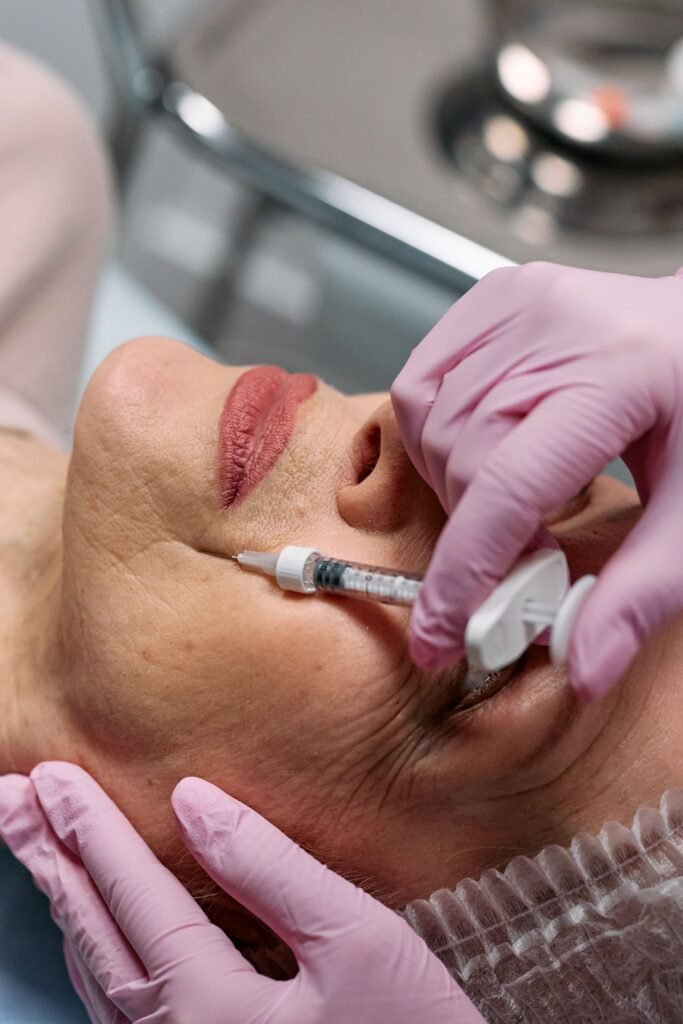
From a medical perspective, the difference between Baby Botox and standard Botox is surprisingly small. In most cases, the variation comes down to only a few units of product—sometimes just two or three. However, as Los Angeles nurse practitioner and OV Aesthetics founder Olivia Vaughan, NP-C explains, there is no universal definition of a “baby” dose because every patient’s facial muscles and anatomy are different.
She notes that “Baby Botox” is primarily a marketing phrase rather than a medical classification. It generally refers to using fewer units than a standard treatment, but the ideal dosage depends entirely on the individual. Muscle strength, facial movement patterns, and anatomy all influence how much product is appropriate. Likewise, the number of injection sites and the amount placed at each location determine both the effectiveness and the longevity of the results.
In Vaughan’s experience, most patients requesting Baby Botox are not actually asking for a different procedure. What they really want is a natural-looking outcome—softened lines while still maintaining normal facial movement and expression. Importantly, this type of result can also be achieved using conventional Botox treatment because dosing is already customized for every patient.
Recovery is essentially identical regardless of whether someone receives a lower or higher number of units. Mild redness, slight swelling, or occasional bruising occur at similar rates because the injection technique remains the same. The only meaningful distinction is durability: using fewer units generally means the effects wear off sooner, requiring more frequent maintenance.
Are “Baby” or “Mini” Surgeries Actually Different?
The short answer is not really.
Although some cosmetic surgeries may involve smaller incisions or be less extensive than others, calling them “mini” or “baby” procedures can create a misleading impression. Regardless of how subtle the intended outcome may be, surgery remains surgery—with the same need for careful planning, technical expertise, and postoperative recovery.
Los Angeles plastic surgeon Dr. Marc Mani believes the terminology itself is problematic.
“Calling a facelift or rhinoplasty ‘mini’ isn’t a medical description—it’s a marketing tactic. It suggests the procedure is less significant than it actually is, which minimizes the risks and recovery involved.”
New York facial plastic surgeon Dr. Dara Liotta shares a similar view, particularly when it comes to so-called “baby nose jobs.”
From a surgical standpoint, any operation that permanently changes the structure or appearance of the nose is a rhinoplasty. Whether the adjustment is dramatic or barely noticeable doesn’t alter the nature of the procedure. Even subtle refinements require the same level of surgical precision because the nose must continue functioning properly while achieving the patient’s cosmetic goals.
As Dr. Liotta explains, preserving both appearance and function is critical.
A surgeon isn’t simply reshaping the nose—they’re ensuring it remains structurally stable over time, resists shifting or twisting during healing, and continues to allow normal breathing. These considerations exist regardless of how minor the cosmetic change may appear.
For that reason, describing the operation as a “baby rhinoplasty” or an “undetectable nose job” risks understating what patients should expect from a genuine surgical procedure.
When Is a “Mini” Procedure Actually Smaller?
There are situations where a cosmetic procedure is less extensive than another version of the same surgery. However, that doesn’t necessarily make it easier or safer.
According to Dr. Mani, a so-called mini facelift often refers only to a shorter incision rather than a fundamentally different surgical technique. While a smaller incision may reduce visible scarring in some cases, it can also increase tension on the wound during closure, potentially affecting both healing and cosmetic outcomes.
Patients may experience a somewhat shorter recovery, but they should also understand that the improvement may be more limited. In some cases, poorly planned short-incision techniques can even leave more noticeable distortion around the ear.
To address these concerns, Dr. Mani developed an endoscopic Scarless Lift, which uses a camera and incisions hidden within the hairline or behind the ear. Although the approach is minimally invasive externally, he emphasizes that it remains a full surgical procedure—not a shortcut.
Patients still experience swelling, bruising, activity restrictions, and a recovery period comparable to a traditional deep-plane facelift. The difference lies in the surgical approach, not in the seriousness of the operation.
Focusing on Results Instead of Labels
Another concern with marketing procedures as “mini” is that patients may request less surgery than their anatomy actually requires.
If important components of a standard procedure are omitted simply to create the impression of a lighter treatment, the outcome may be compromised. Some patients ultimately require revision surgery to correct issues that could have been addressed during the initial operation.
Dr. Liotta encourages patients to focus less on terminology and more on their desired outcome.
Rather than asking for a “mini” version of a procedure, patients should communicate the result they hope to achieve and allow their surgeon to determine the safest and most effective surgical plan. A customized approach is far more important than fitting a procedure into a marketing label.
Ultimately, while cosmetic surgery can certainly be tailored to create subtle, natural-looking improvements, those refinements do not transform it into something fundamentally different. Whether the changes are dramatic or understated, the operation still deserves the same level of consideration, preparation, and respect as any other surgical procedure.
What’s in a Name?
The growing popularity of terms like Baby Botox, mini facelift, and baby rhinoplasty raises an obvious question: why do these labels exist in the first place?
Part of the answer lies in perception.
For many people who are considering cosmetic procedures for the first time, clinical terms such as Botox, fillers, or plastic surgery can feel intimidating. Softer labels make these treatments seem less serious, more approachable, and easier to accept.
According to Olivia Vaughan, this type of language can lower the psychological barrier for new patients.
She explains that neuromodulators like Botox and Dysport already carry strong public perceptions. Describing a treatment as “baby” Botox may make someone feel more comfortable exploring the option. However, the terminology doesn’t change the underlying procedure. The medication, injection technique, and treatment principles remain exactly the same. The only variable is how much product is used to match an individual’s facial anatomy and aesthetic goals.
In other words, the branding changes—but the medicine doesn’t.
A Better Way to Describe Subtle Results
Dr. Dara Liotta believes there’s a more accurate way to discuss conservative cosmetic changes.
Rather than calling a procedure “mini,” she prefers terms that describe the outcome rather than minimizing the procedure itself. For example, when discussing rhinoplasty, she often refers to subtle refinements as finesse rhinoplasty.
The distinction is important.
Calling a procedure “mini” can unintentionally suggest that recovery will also be minor or effortless. Patients may assume they’ll experience less swelling, bruising, or downtime simply because the desired aesthetic change is small.
In reality, healing doesn’t always reflect the size of the cosmetic adjustment.
Even modest surgical refinements require tissues to recover, swelling to subside, and results to stabilize over time. A subtle outcome doesn’t necessarily mean an easier recovery.
These Terms Didn’t Come From Medical Professionals
Vanessa Lee points out another interesting reality: the phrases Baby Botox and mini facelift weren’t created by physicians or aesthetic practitioners.
Instead, they largely emerged through social media, marketing, and everyday conversations among patients.
Clinicians now frequently encounter people requesting these treatments because they’ve heard friends, influencers, or online creators use the terminology.
Patients often arrive saying they don’t want “regular Botox”—they just want “Baby Botox,” assuming it’s a fundamentally different procedure.
In practice, providers simply evaluate facial anatomy, muscle activity, and treatment goals before deciding how many units to administer. Whether that number happens to be smaller doesn’t alter the biological process or the medical procedure itself.
As Lee explains, what often changes isn’t the treatment—it’s how comfortable patients feel discussing it.
Why Softer Language Matters
Language shapes expectations.
Words like baby, mini, or tiny naturally imply something harmless, low-risk, and easy to reverse. Applied to cosmetic medicine, they can unintentionally downplay the fact that these are still medical procedures performed with needles, prescription medications, lasers, or surgery.
That doesn’t mean the procedures are inherently negative.
Rather, it means patients deserve an accurate understanding of what they’re choosing.
Lee believes that education is ultimately more valuable than euphemisms. When people understand how treatments work, why they’re recommended, and what recovery actually involves, they become less reliant on softened marketing language.
Greater transparency also helps challenge the stereotypes surrounding aesthetic medicine. Many people still associate cosmetic procedures with exaggerated or unnatural results because those examples receive the most attention online.
In reality, modern aesthetic medicine is highly individualized. Treatments can often be tailored to produce subtle, balanced improvements while respecting each patient’s unique anatomy.
The important distinction is that subtle results do not make a procedure less real. Whether the outcome is dramatic or barely noticeable, the treatment should still be discussed honestly and understood for what it is.
The Bottom Line
Let’s be clear: there is nothing inherently wrong with choosing cosmetic treatments.
If aesthetic procedures help you feel more confident, that is a personal decision. If you have no interest in injectables or plastic surgery, that choice is equally valid. And if you’re somewhere in between—curious, uncertain, or still weighing the pros and cons—that’s completely understandable as well.
The issue isn’t whether someone decides to undergo treatment.
It’s how those treatments are being described.
Vanessa Lee believes labels such as Baby Botox or mini facelift unintentionally suggest that these procedures are insignificant, harmless, or even something patients can distance themselves from.
In reality, they’re still medical interventions.
Whether you’re receiving Botox, dermal fillers, laser treatments, or cosmetic surgery, you’re undergoing a procedure that involves medical expertise, specialized equipment, and varying degrees of risk and recovery. Using softer language shouldn’t obscure that reality.
Lee argues that acknowledging this fact allows patients to make more informed decisions based on science rather than marketing.
“These are medical treatments. Once we recognize that, we can focus on understanding the science behind them instead of relying on labels that make them sound less significant.”
The Pressure Behind the Language
The popularity of these euphemisms doesn’t exist in a vacuum.
Many people—particularly women—navigate conflicting expectations about beauty and aging. Society encourages people to appear youthful while simultaneously criticizing those who openly pursue cosmetic enhancements. As a result, subtle qualifiers like baby or mini can become a way to soften that contradiction.
It’s understandable why someone might feel the need to emphasize that they had “just a little Botox” or “only a tiny bit of filler.” The language can function almost as a disclaimer, signaling that the treatment was minimal enough to avoid judgment.
But that impulse reflects broader social pressures rather than the reality of the procedures themselves.
Being transparent about aesthetic choices doesn’t diminish anyone’s authenticity. If anything, openness helps normalize informed decision-making and reduces the stigma surrounding cosmetic medicine.
Transparency Benefits Everyone
Honest conversations about cosmetic procedures don’t simply benefit those who have already decided to pursue treatment.
They also help people who are still uncertain.
Many individuals occupy a middle ground: they’re interested in aesthetic medicine but hesitate because they lack reliable information or worry about being judged. When public discussions rely on vague euphemisms or minimize what’s actually involved, those individuals are left with unrealistic expectations instead of meaningful guidance.
Greater transparency encourages more informed conversations about motivations, risks, recovery, and expected outcomes.
Rather than pretending a procedure is “barely anything,” patients and practitioners can discuss it for what it actually is—a personal medical decision that deserves careful consideration.
Owning the Decision
Lee hopes aesthetic medicine eventually reaches a point where patients no longer feel obligated to qualify or downplay their choices.
Instead of saying they only had “Baby Botox” or insisting that a procedure was almost insignificant, people could simply acknowledge the treatment without embarrassment or excessive explanation.
A straightforward statement such as, “I chose this treatment because I liked the results and it was the right decision for me,” reflects far more confidence than relying on softer terminology to make the procedure seem more acceptable.
There doesn’t need to be an apology, a disclaimer, or a carefully crafted distinction between “real” cosmetic work and supposedly smaller versions of it.
A medical procedure is still a medical procedure.
Final Thoughts
Whether the goal is dramatic transformation or nearly imperceptible refinement, the fundamental nature of aesthetic medicine doesn’t change.
Using terms like Baby Botox, mini facelift, or baby nose job may make cosmetic procedures sound less intimidating, but the labels don’t alter the science, the techniques, the recovery, or the responsibilities involved.
Patients deserve accurate information rather than comforting euphemisms.
Ultimately, subtle cosmetic work is still cosmetic work. The amount of product used or the degree of change achieved may differ from person to person, but calling a procedure “baby” or “mini” doesn’t make it fundamentally different from its traditional counterpart. Honesty—not marketing language—is what leads to better expectations, more informed decisions, and greater confidence in whatever choice someone ultimately makes.